

Folarin Balogun and the “red card”
Leadership Begins in the Sandbox
Episode Fourty Six
I was following the Soccer World Cup a bit, when something caught my attention. “The Red Card Drama.”
Not the penalty itself, but the response to it. Up until that point I neither knew what the “red card” meant, nor who soccer player Folarin Balogun was. However I like many, were about to watch leadership in motion.
The reason for the “red card” decision I could not analyze. I do not know or understand the game nor its rules that well. What interested me was Balogun’s character, his “leadership”, in a spiritual moment. ” (https://www.alloutsoccer.com/news/usmnt-balogun-red-card-response-1919807)
Following the decision which, by reason was disappointing, Balogun did a few remarkable things:
He stayed calm and waited before speaking
“I think it was just important to stay calm. I never want to react out of anger and out of emotion.
“I think a yellow card would have been fair just due to it not being intentional…
He accepted responsibility.
“But I think it’s happened, and it’s something I have to accept and just move forward from.”
He considered his audience, his influence, his Identity, his team, his representation and his assignment on the world stage.
“There’s still lots of people we’re inspiring, little kids, boys and girls who are watching, and we have to show them the correct way to handle things, even when you think it’s unjust.”
He remained respectful
His decision to still shake the referee’s hand postgame, Balogun explained, “As said, you can feel like something, injustice can happen to you. It’s not an excuse to be disrespectful… “I’m aware that the World Cup might be the first time a lot of American viewers are tuning in. So it’s important just to show people, whether things happen to you, good or bad, just to continue to be yourself.”
If we take his response and decisions, in that particular circumstances, back to our employees and management training rooms, many lessons can be taught. It takes significant discipline, courage and character to react and respond the way he did. Many of our global and business leaders can take lessons and examples from his playbook, his “Sandbox” Leadership.
Aside from playing tennis in my college years, I was never a great sports girl. Even then, my motivation to play tennis was to gain an interest and participation in my boyfriend’s favorite sport.
However, with all the hoopla, marketing blitz, wall to wall media coverage and conversations, and our home’s proximity to the new “US Soccer Federation Headquarters” it is difficult to ignore both the game and the symbolism of it all.
Soccer seems to have a “vibe”, an “energy” and most of all a “global unifying movement”, not seen in other sports. Top players, and leaders of teams are from countries around the globe. As we look across the soccer horizons all nationalities, cultures and ethnicities are represented.
According to a Commentary by Edmond W. Davis | Social Historian •Jun 29, 2026 not only is soccer having a moment, but African Soccer players also. (https://eurweb.com/african-players-fifa-world-cup-2026/)
With 48 nations, 104 matches, and 1,248 players representing countries across six continents, the tournament is more than a competition for a trophy. It is a global classroom. It is a lesson in migration, commerce, nationality, economics, culture, and identity. Most importantly, it is a reminder that modern sports often reflect the broader movements of humanity itself.
For example, consider players from Africa, the 2026 FIFA World Cup is the largest sporting event in soccer history. Having said that, over 62% of all 48 teams have players of African descent. This is nothing new, yet it’s being observed on a scale unlike ever before.
Herein lies the unifier. Teams are scouting for and want top players, coaches and leaders. Soccer fans are not only rooting for their country’s team, but by inclusion are screaming for the wins no matter what other nationalities and ethnic groups are represented on their favorite team. They are actually screaming “we are one, you represent us”. “We love you…. All of you”.
Where in some circles, or hierarchies, “diversity and inclusion” are to be avoided at all costs, because they are “not one of us”, not as good as we are, do not belong, cannot be our leader, etc.
In the game of soccer diversity is not the outlier, it is the norm, the must, the play.
It is the expected, the carry, the win and the celebration. In other words, when it truly counts, race, ethnicity and variation of culture (diversity), character and leadership matters. It is in the flow, the craftsmanship and the spirit of the game of soccer. Everyone is welcomed.
So comes leadership. Balugon’s leadership moment was not a color marker, or separator. It is his identity, lifestyle, character and understanding of his calling and assignment and a rise within to meet that call.
Great Leaders such as Martin Luther King, Nelson Mandela, President Barack Obama, Mother Theresa, Elenor Roosevelt, Gandhi, Kwame Nkrumah, David Yonggi Choi, Catherine Booth, and many others, have made it their life mission to serve and work on behalf of humanity, to rise and meet the call.
Many people believe or are taught to believe that people of a certain color or ethnicity cannot or should not be leaders. Yet again, God selects, appoints and trains leaders, not by color system. It is by his own desire in service to humanity.
Leaders are ethnically and economically diverse, responsible and like Joseph in the Bible they are found making the noble and unifying decisions. They understand the assignment, the representation, the gift, the blessings and the consequence, and therein lies the mystery.
What man sees as “color incapable”, God sees a person he can train, equip and release to do his work on the earth. God sees the Servant Leadership in the person.
Folarin Balogun, we thank you for your humility and grace as an incredible soccer player and young global leader. May our children and our other global leaders, including myself, learn from the example you have shown and the bar you have raised. Congratulations!
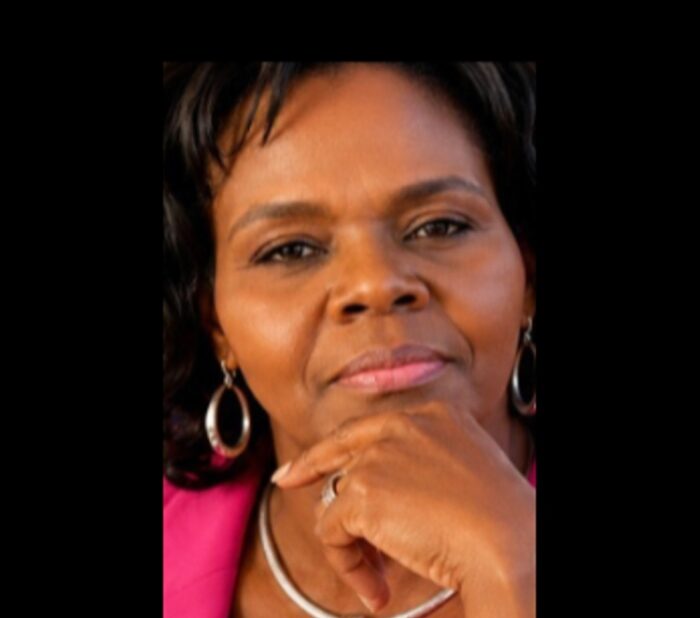
Sonia Wignall
Sonia M. Wignall is Co-Founder//Board Chair, Diaspora Global Foundation. A STEM Education Organization. www.leanintostem.org. She is also a Freelance Cultural and Lifestyle Writer. Her articles and monthly column “Perspective”, and “Perspective on the Arts” can be found here. She is the Author and Developer of “Leadership Begins in the Sandbox”..Sandbox Leadership.